
ECLIPSE RESOURCES
Introduction
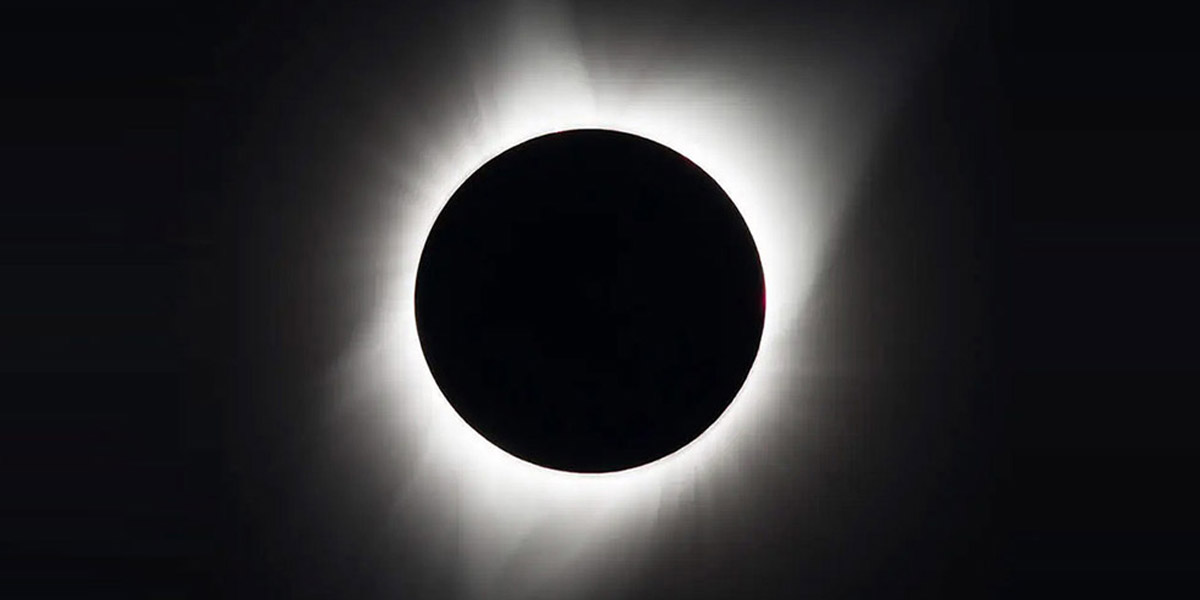
A total solar eclipse is an exciting event to experience in person as well as a unique opportunity for scientists to observe and make new discoveries. Einstein’s theory of general relativity was proven by observing the bending of starlight as it passes close to the Sun; a phenomenon that can be seen when our moon blocks out much of the Sun’s light. This same effect – known as gravitational lensing - is used today with NASA’s space telescopes to observe and study properties of distant objects.
Eclipses also give us insights into planets in other solar systems, known as exoplanets. When an exoplanet passes in front of its star, astronomers can detect its presence by a dimming of light. By measuring the light before, during, and after when the exoplanet passes in front of the star we can also learn about the planet’s atmosphere and temperature. Transits are important opportunities for discovery – allowing us to locate exoplanets and investigate what the composition of those exoplanets are.
The resources below cover two topics – gravitational lensing and exoplanet transits. First, there is a curated collection of articles, images, and videos for understanding the science. Directly below, we’ve included a collection of hands-on activities that allow you to explore Gravitational Lensing and Exoplanet science and integrate into public programs and activities.
Gravitational Lensing
Gravitational lensing is a phenomenon predicted by Einstein's theory of general relativity, where the gravitational field of a massive object, like a galaxy or a cluster of galaxies, bends the light from a more distant object, such as a background galaxy or quasar. This bending of light can create multiple distorted and magnified images of the background object, effectively acting as a natural lens.
We can observe this effect during a solar eclipse. When the moon passes in front of the Sun, we see the light from distant stars and galaxies is bent around the moon from the Sun’s mass, the effect of gravity on light. Explore the effects of gravitational lending with the materials below.
Science Content
Gravitational Lensing Images
Activities
- Supernova Refsdal Image Slider Interactive
- Galaxy Cluster Abell 2744 Lithograph
- Galaxy Cluster MACS J0416.1-2403 Lithograph
Exoplanet Transits
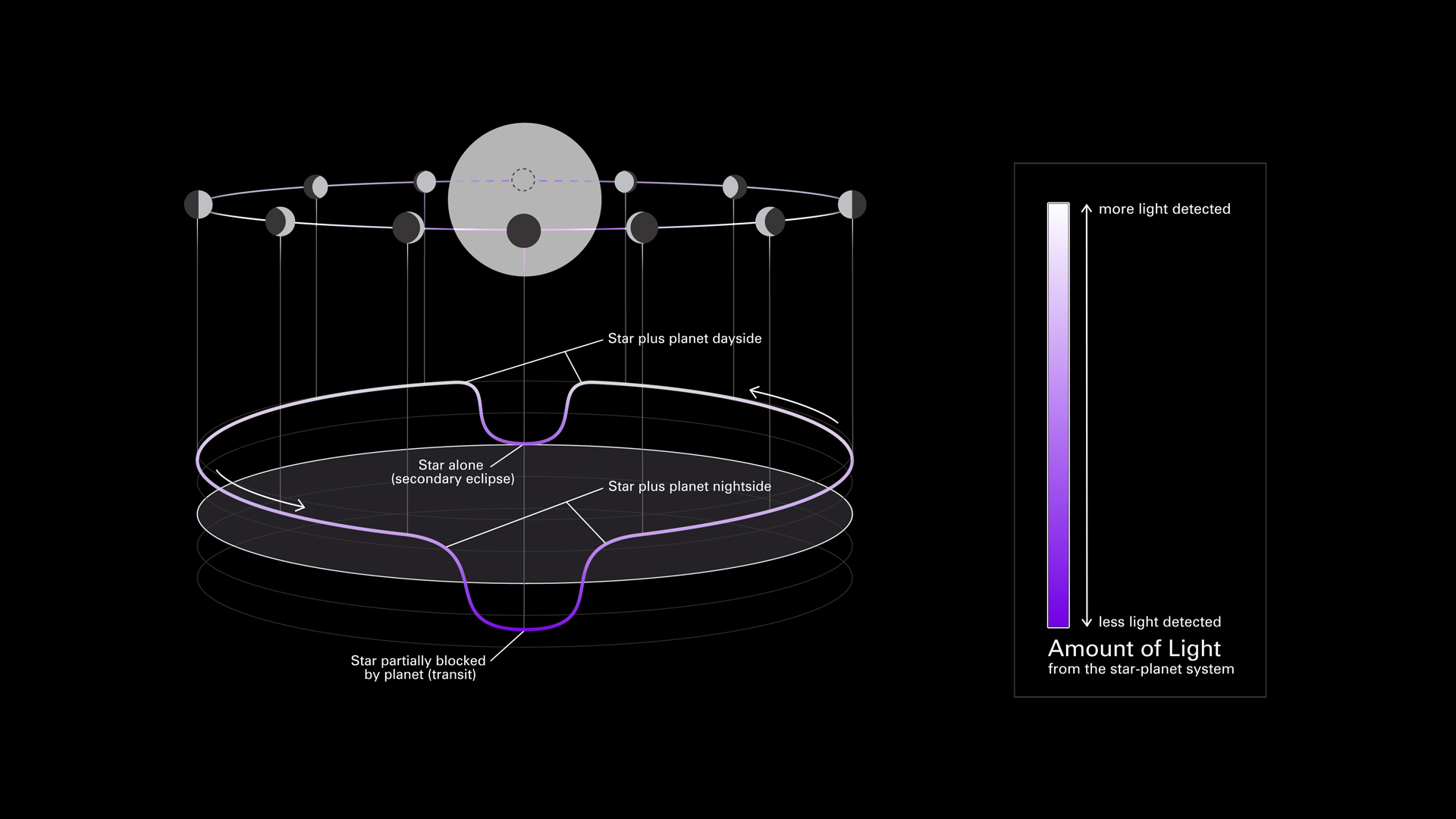
When the Moon passes between the Sun and Earth, an occultation happens. An occultation involves one celestial body completely blocking another, whereas a transit involves a celestial body moving across the face of another, leading to the partial blocking of light. An eclipse can be either a transit or an occultation, as it involves the partial or complete obscuration of one celestial body by another or by a shadow.
Astronomers and planetary scientists often search for exoplanets using what is called the “transit method.” When an exoplanet passes in front of its host star, the light of the star can be measured for diming. Astronomers can also observe transits to estimate an exoplanet’s size, its orbital inclination, and period. While there are multiple ways to find exoplanets, transit detections have discovered most of the exoplanets that we know about today.