
CASSIOPEIA A RESOURCES
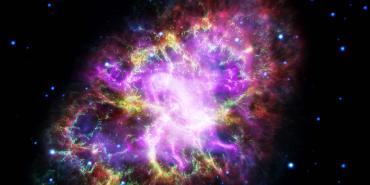
Crab Nebula Introduction
What happens when a star explodes as a supernova?
These resources explain what we know about supernovae, the powerful and catastrophic explosions that occur at the end of certain types of massive stars’ lifecycles.
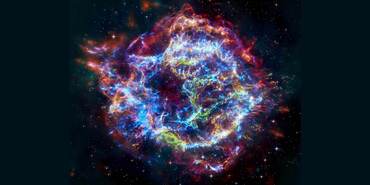
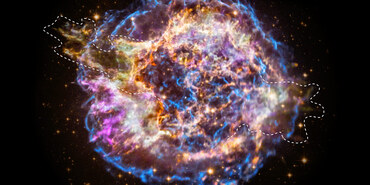
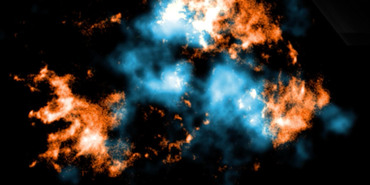
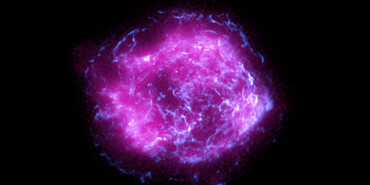
Cassiopeia A, or Cas A, is a core collapse or Type II supernova. It is one of the youngest known supernova remnants, with the explosion estimated to have occurred about 340 years ago from our perspective. Stars, like the one Cas A orginated from, exhaust their nuclear fuel and eventually undergo a gravitational collapse. The sudden collapse results in a powerful shockwave that propagates through the star, causing it to explode. The core of the star can collapse further, forming either a neutron star or a black hole, while the outer layers of gas and dust are expelled into space. That gas and dust contain elements like sulfur, oxygen, argon, and neon.
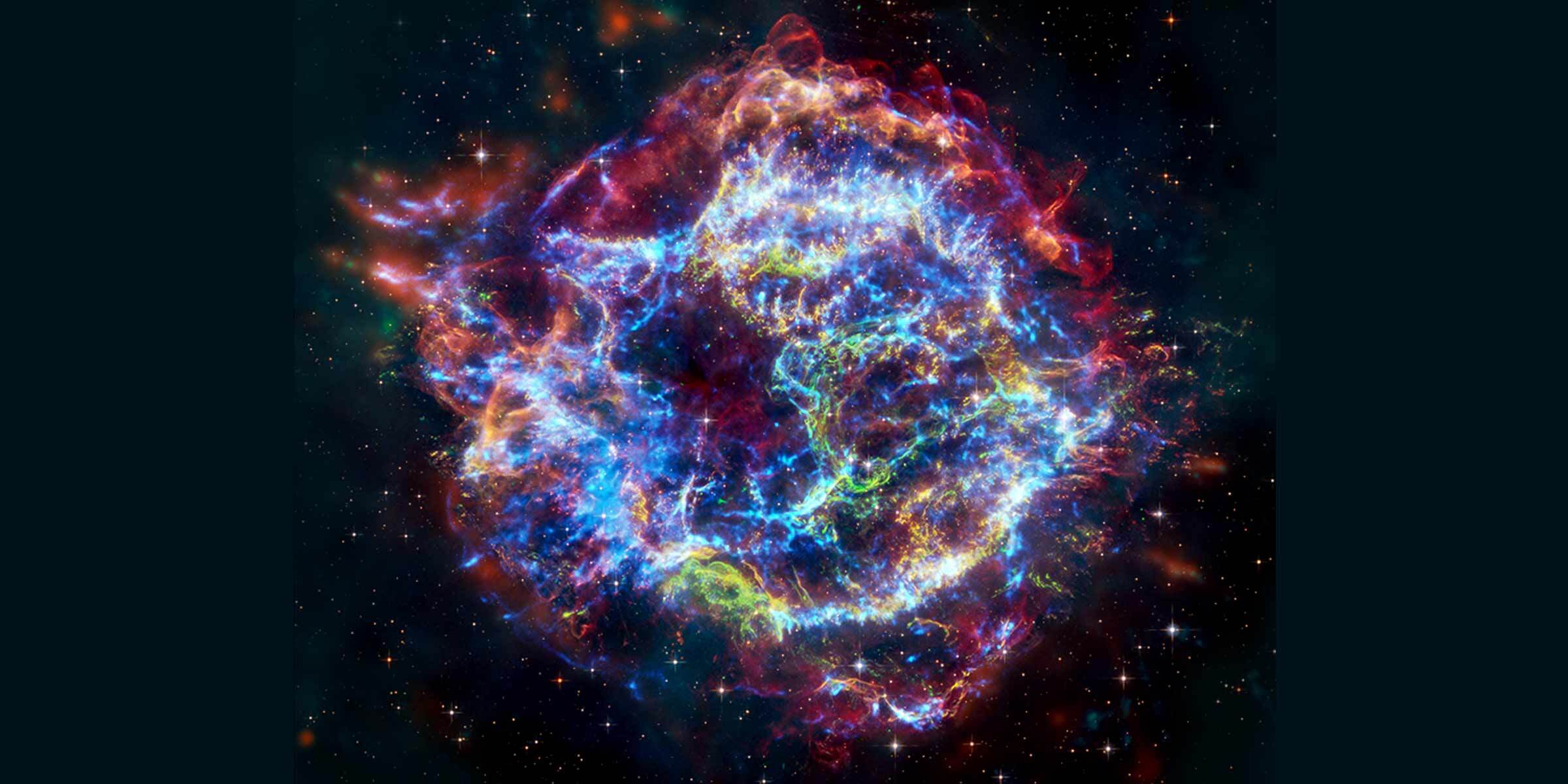
Scientists have studied Cassiopeia A using various telescopes:
- The Chandra X-ray Observatory has conducted multiple observations of Cas A, providing valuable insights into its neutron star, the details of the explosion, and the composition of the debris ejected into space.
- NASA’s Hubble Space Telescope has imaged the complex and intricate structure of the star’s shattered fragments.
- NASA’s NuSTAR created a map of radioactive material in Cas A, revealing how shock waves likely rip apart massive dying stars.
- NASA’s Spitzer Space Telescope helped scientists understand Cas A’s outer shell of warm dust and the light echoes from the original explosion in the clouds surrounding the remnant.
- NASA’s James Webb Space Telescope has provided new high-definition images of the remnant, revealing details about its structures of gas and glowing dust.
Explore Cas A through the data collected by these telescopes and in different formats using your senses of sight, sound, and touch.
Learn about Cas A
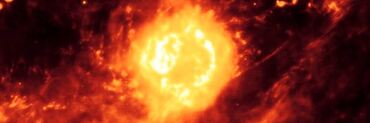
NASA’s Astrophoto Challenge
Try your hand at processing images of the Crab Nebula from NASA's space telescopes, or capture and process your own!
Learn about the Life and Death of Stars
-
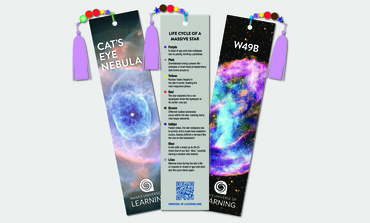
Stellar Life Cycle Bookmark and Bracelet
Participants will learn that the evolution of a star depends on its initial mass. They will create a tassel for a bookmark describing the stages of a star’s life cycle, using different colored beads to represent each stage.
-
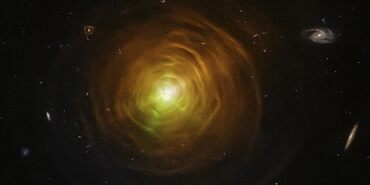
Stellar Evolution Scavenger Hunt
This activity introduces participants to the many stages in the life cycles of massive and low-to-intermediate-mass stars.
-
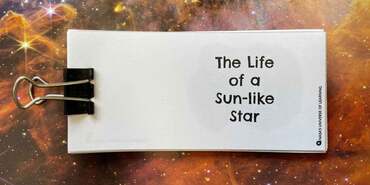
Stellar Evolution Flipbook Activity Guide
Participants will explore the life cycle of a star by creating a small book with a series of pictures that change gradually from page to page.
-
Life and Death of Stars Resource Guide
This resource guide contains a range of resources and activities to help you guide audiences as they explore many facets of stellar evolution!
-
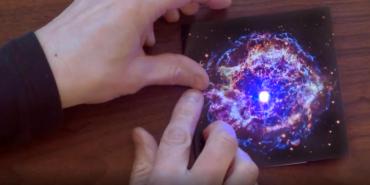
Paper Circuits: Light Up Exploded Stars
Paper circuits help learners of all ages explore the basics of electricity and conductivity. They function as simple low-voltage electronic circuits made using paper, LED lights, a type of conductive tape such as copper, and a small battery for the power source.
-
Think Tank: A Star is Born!
Hear about some of the most terrifying objects in space: vampire stars, black widow pulsars, and dark energy.
-
Think Tank: When Stars Go Boom
Hear about some of the most terrifying objects in space: vampire stars, black widow pulsars, and dark energy.
-
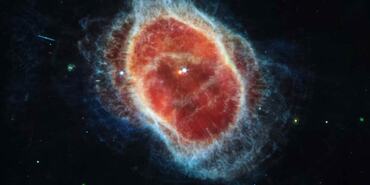
Science Briefing: Exploring the Lives and Deaths of Stars
Learn how low-, intermediate-mass, and massive stars evolve in single- and binary-star configurations.
-
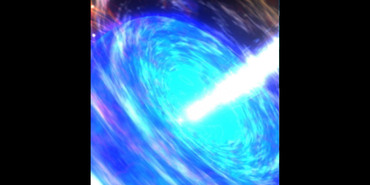
Science Briefing: Deaths and Afterlives of Stars
Learn about the deaths of massive stars and the high-energy remnants of massive stars (pulsars), and how NASA’s high-energy missions provide insight into these processes.
-
Science Briefing: Cosmic Chills: Vampire Stars, Black Widow Pulsars, and Dark Energy
Hear about some of the most terrifying objects in space: vampire stars, black widow pulsars, and dark energy.