EDUCATIONAL RESOURCES AND EVENTS

Educational Resources and Events Catalog

Filter Resources

Filter Results

  1. Program Guide & Resources: Finding Exoplanets

    Resource Guide
    Many exoplanets — worlds beyond our solar system — are very small and faint compared to their bright host stars, making it nearly impossible to spot them directly. Despite this, astronomers...
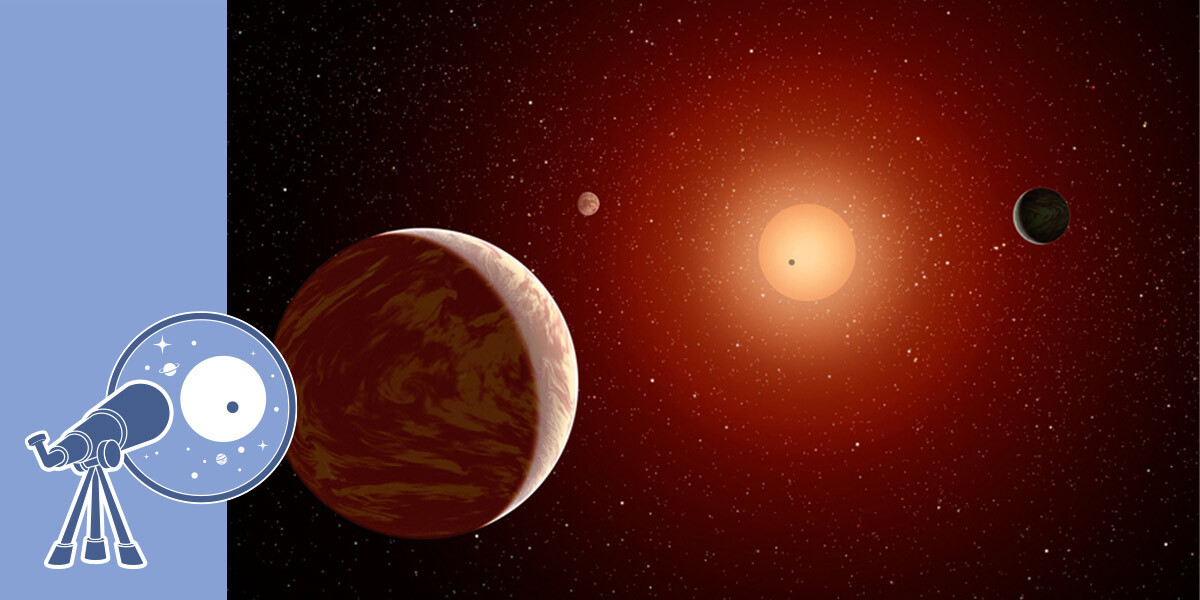
    Rectangular graphic illustrating the Exoplanets program theme. The right four-fifths of the graphic shows an illustration of three exoplanets orbiting a bright star. Running vertically along the left side of the image is a wide blue bar. In the lower half of the bar is a line drawing of a simple hand-held telescope on a tripod. The telescope points toward a circular field of view showing stars and planets.
  2. Program Guide & Resources: Stars

    Resource Guide
    Stars are giant balls of gas held together by their own gravity. They have different colors and sizes, and like humans, they have a life cycle: Stars are born, grow old, and eventually die.  With...
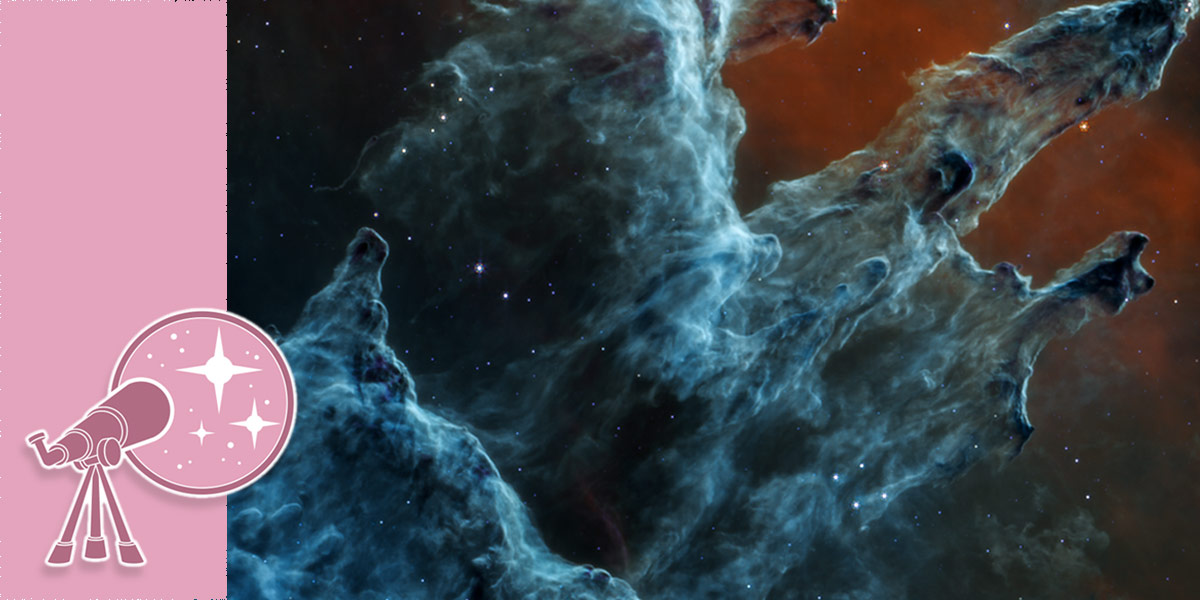
    Rectangular graphic illustrating the Stars program theme. The right four-fifths of the graphic consists of an infrared image of the Pillars of Creation from the Webb Space Telescope. The pillars are a ghostly blue-gray color with craggy finger-like tips. Running vertically along the left side of the image is a wide pink bar. In the lower half of the bar is a line drawing of a simple hand-held telescope on a tripod. The telescope points toward a circular field of view showing stylized stars with four-pointed diffraction patterns.
  3. Program Guide & Resources: Data and Imaging Processing

    Resource Guide
    Scientists rely on computers not only to do calculations, but also to transform telescope data into images. Coding and programming are some of the many methods that astronomers use in order to study the...
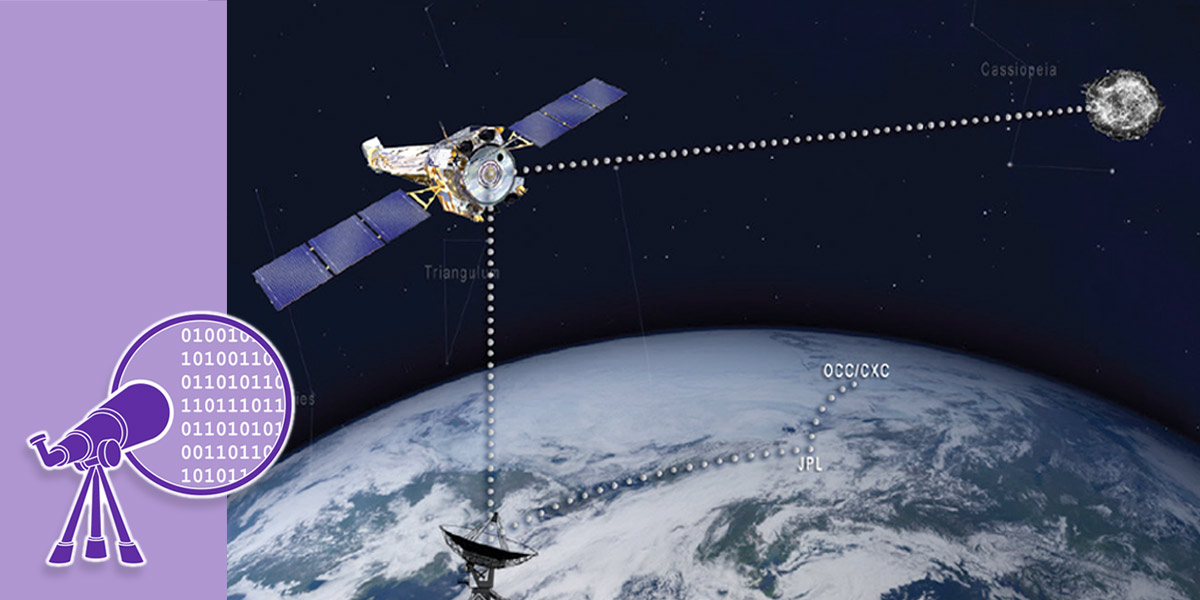
    Rectangular graphic illustrating the Data and Image Processing program theme. The right four-fifths of the graphic shows a space telescope orbiting Earth, collecting data from a supernova remnant, and transmitting the data to a large satellite dish.    Running vertically along the left side of the image is a wide purple bar. In the lower half of the bar is a line drawing of a simple hand-held telescope on a tripod. The telescope points toward a circular field of view showing rows of ones and zeros.
  4. Program Guide & Resources: Electromagnetic Spectrum

    Resource Guide
    Astronomers learn about space objects by gathering and analyzing the light coming from them. Since there is more than one type light, observations of multiple types of light from an object —multiwavelength...
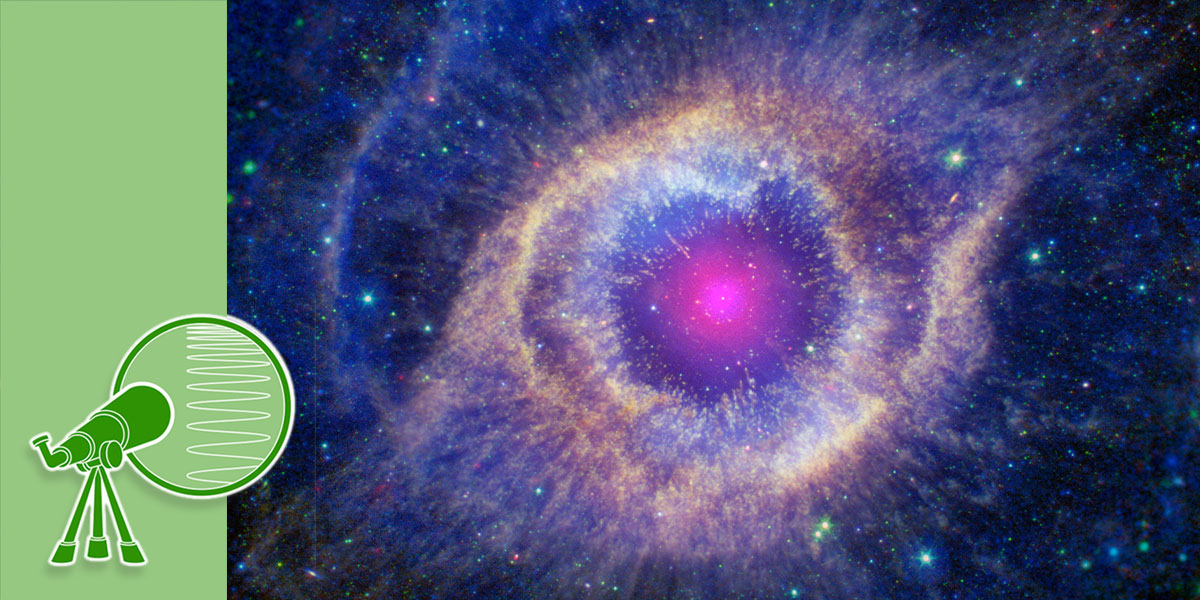
    Rectangular graphic illustrating the Electromagnetic Spectrum program theme. The right four-fifths of the graphic is a colorful multiwavelength space telescope image of a planetary nebula. The nebula looks like a human eyeball, with a hot pink pupil surrounded by blue and orange iris-like rings.   Running vertically along the left side of the image is a wide green bar. In the lower half of the bar is a line drawing of a simple hand-held telescope on a tripod. The telescope points toward a circular field of view showing an expanding wave pattern.